Showing posts with label preserve. Show all posts
Showing posts with label preserve. Show all posts
Sunday, February 3, 2013

Saturday, February 2, 2013
Human
Humans (Homo sapiens) are primates of the family Hominidae, and the only extant species of the genus Homo.Humans are characterized by having a large brain relative to body size, with a particularly well developed neocortex, prefrontal cortex and temporal lobes, making them capable of abstract reasoning, language, introspection, problem solving and culture through social learning. This mental capability, combined with an adaptation to bipedal locomotion that frees the hands for manipulating objects, has allowed humans to make far greater use of tools than any other living species on Earth. Humans are the only extant species known to build fires and cook their food, as well as the only known species to clothe themselves and create and use numerous other technologies and arts. The study of humans is the scientific discipline of anthropology.

Homo sapiens originated in Africa, where they reached anatomical modernity about 200,000 years ago and began to exhibit full behavioral modernity around 50,000 years ago.The human lineage diverged from the last common ancestor with its closest living relative, the chimpanzee, some five million years ago, evolving into the Australopithecines and eventually the genus Homo.The first Homo species to move out of Africa was Homo erectus, the African variety of which, together with Homo heidelbergensis, is considered to be the immediate ancestor of modern humans. Homo sapiens proceeded to colonize the continents, arriving in Eurasia 125,000-60,000 years ago,Australia around 40,000 years ago, the Americas around 15,000 years ago, and remote islands such as Hawaii, Easter Island, Madagascar, and New Zealand between the years AD 300 and 1280.
As early as 12,000 years ago, humans began to practice sedentary agriculture, domesticating plants and animals which allowed for the growth of civilization. Humans subsequently established various forms of government, religion, and culture around the world, unifying people within a region and leading to the development of states and empires. The rapid advancement of scientific and medical understanding in the 19th and 20th centuries led to the development of fuel-driven technologies and improved health, causing the human population to rise exponentially. With individuals widespread in every continent except Antarctica, humans are a cosmopolitan species, and by 2012, their population was estimated to be around 7 billion.
Human interrelationship
Although humans currently comprise only a minuscule proportion of the total living biomass on Earth, the human effect on nature is disproportionately large. Because of the extent of human influence, the boundaries between what humans regard as nature and "made environments" is not clear cut except at the extremes. Even at the extremes, the amount of natural environment that is free of discernible human influence is presently diminishing at an increasingly rapid pace.
The development of technology by the human race has allowed the greater exploitation of natural resources and has helped to alleviate some of the risk from natural hazards. In spite of this progress, however, the fate of human civilization remains closely linked to changes in the environment. There exists a highly complex feedback loop between the use of advanced technology and changes to the environment that are only slowly becoming understood.Man-made threats to the Earth's natural environment include pollution, deforestation, and disasters such as oil spills. Humans have contributed to the extinction of many plants and animals.
Humans employ nature for both leisure and economic activities. The acquisition of natural resources for industrial use remains the primary component of the world's economic system.Some activities, such as hunting and fishing, are used for both sustenance and leisure, often by different people. Agriculture was first adopted around the 9th millennium BCE. Ranging from food production to energy, nature influences economic wealth.
Although early humans gathered uncultivated plant materials for food and employed the medicinal properties of vegetation for healing,most modern human use of plants is through agriculture. The clearance of large tracts of land for crop growth has led to a significant reduction in the amount available of forestation and wetlands, resulting in the loss of habitat for many plant and animal species as well as increased erosion.
Human Nature
Human nature refers to the distinguishing characteristics, including ways of thinking, feeling and acting, that humans tend to have naturally, i.e. independently of the influence of culture. The questions of what these characteristics are, what causes them, and how fixed human nature is, are amongst the oldest and most important questions in western philosophy. These questions have particularly important implications in ethics, politics, and theology. This is partly because human nature can be regarded as both a source of norms of conduct or ways of life, as well as presenting obstacles or constraints on living a good life. The complex implications of such questions are also dealt with in art and literature, while the multiple branches of the Humanities together form an important domain of inquiry into human nature, and the question of what it means to be human.
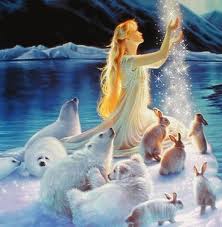
The branches of contemporary science associated with the study of human nature include anthropology, sociology, sociobiology, and psychology, particularly evolutionary psychology, and developmental psychology. The "nature versus nurture" debate is a broadly inclusive and well-known instance of a discussion about human nature in the natural sciences.
History
The concept of nature as a standard by which to make judgments was a basic presupposition in Greek philosophy. Specifically, "almost all" classical philosophers accepted that a good human life is a life in accordance with nature.
On this subject, the approach of Socrates, sometimes considered to be a teleological approach, came to be dominant by late classical and medieval times. This approach understands human nature in terms of final and formal causes. Such understandings of human nature see this nature as an "idea," or "form" of a human. By this account, human nature really causes humans to become what they become, and so it exists somehow independently of individual humans. This in turn has sometimes been understood as also showing a special connection between human nature and divinity.
The existence of this invariable human nature is, however, a subject of much historical debate, continuing into modern times. Against this idea of a fixed human nature, the relative malleability of man has been argued especially strongly in recent centuries—firstly by early modernists such as Thomas Hobbes and Jean-Jacques Rousseau, the latter of whom stated:“ We do not know what our nature permits us to be. – Jean-Jacques Rousseau, Emile ”
Since the mid-19th century, thinkers such as Hegel, Marx, Kierkegaard, Nietzsche, Sartre, structuralists and postmodernists have also sometimes argued against a fixed or innate human nature.
Still more recent scientific perspectives such as behaviorism, determinism, and the chemical model within modern psychiatry and psychology, claim to be neutral regarding human nature. (As in all modern science they seek to explain without recourse to metaphysical causation.) They can be offered to explain its origins and underlying mechanisms, or to demonstrate capacities for change and diversity which would arguably violate the concept of a fixed human nature.
Socratic philosophy

The human soul in the works of Plato and Aristotle has a divided nature, divided in a specifically human way. One part is specifically human and rational, and divided into a part which is rational on its own, and a spirited part which can understand reason. Other parts of the soul are home to desires or passions similar to those found in animals. In both Aristotle and Plato spiritedness, thumos, is distinguished from the other passions or epithumiai. The proper function of the "rational" was to rule the other parts of the soul, helped by spiritedness. By this account, using one's reason is the best way to live, and philosophers are the highest types of humans.
Aristotle, Plato's most famous student, made some of the most famous and influential statements about human nature. In his works, apart from using a similar scheme of a divided human soul, some clear statements about human nature are made:
Man is a conjugal animal, meaning an animal which is born to couple when an adult, thus building a household (oikos) and in more successful cases, a clan or small village still run upon patriarchal lines.
Man is a political animal, meaning an animal with an innate propensity to develop more complex communities the size of a city or town, with a division of labor and law-making. This type of community is different in kind from a large family, and requires the special use of human reason.
Man is a mimetic animal. Man loves to use his imagination (and not only to make laws and run town councils). He says "we enjoy looking at accurate likenesses of things which are themselves painful to see, obscene beasts, for instance, and corpses." And the "reason why we enjoy seeing likenesses is that, as we look, we learn and infer what each is, for instance, 'that is so and so.'"
For Aristotle, reason is not only what is most special about humanity compared to other animals, but it is also what we were meant to achieve at our best. Much of Aristotle's description of human nature is still influential today, but the particular teleological idea that humans are "meant" or intended to be something, has become much less popular in modern times.
For the Socratics, human nature, and all natures, are metaphysical concepts. Aristotle developed the standard presentation of this approach with his theory of four causes. Human nature is an example of a formal cause according to Aristotle. Their teleological concept of nature is associated with humans having a divine component in their psyches, which is most properly exercised in the lifestyle of the philosopher, which is thereby also the happiest and least painful life.
Modernism
One of the defining changes occurring at the end of the Middle Ages, is the end of the dominance of Aristotelian philosophy, and its replacement by a new approach to the study of nature, including human nature. In this approach, all attempts at conjecture about formal and final causes was rejected as useless speculation. Also, the term "law of nature" now applies any regular and predictable pattern in nature, not literally a law made by a divine law-maker, and in the same way "human nature" becomes not a special metaphysical cause, but simply whatever can be said to be typical tendencies of humans.
Although this new realism applied to the study of human life from the beginning, for example in Machiavelli's works, the definitive argument for the final rejection of Aristotle was associated especially with Francis Bacon, and then René Descartes, whose new approach returned philosophy or science to its pre-Socratic focus upon non-human things. Thomas Hobbes, then Giambattista Vico, and David Hume all claimed to be the first to properly use a modern Baconian scientific approach to human things.
Hobbes famously followed Descartes in describing humanity as matter in motion, just like machines. He also very influentially described man's natural state (without science and artifice) as one where life would be "solitary, poor, nasty, brutish and short."Following him, John Locke's philosophy of empiricism also saw human nature as a tabula rasa. In this view, the mind is at birth a "blank slate" without rules, so data is added, and rules for processing them are formed solely by our sensory experiences.
Jean Jacques Rousseau pushed the approach of Hobbes to an extreme and criticized it at the same time. He was a contemporary and acquaintance of Hume, writing before the French Revolution and long before Darwin and Freud. He shocked Western Civilization with his Second Discourse by proposing that humans had once been solitary animals, without reason or language or communities, and had developed these things due to accidents of pre-history. (A proposal which was also made, less famously, by Giambattista Vico.) In other words, Rousseau argued that human nature was not only not fixed, but not even approximately fixed compared to what had been assumed before him. Humans are political, and rational, and have language now, but originally they had none of these things. This in turn implied that living under the management of human reason might not be a happy way to live at all, and perhaps there is no ideal way to live. Rousseau is also unusual in the extent to which he took the approach of Hobbes, asserting that primitive humans were not even naturally social. A civilized human is therefore not only imbalanced and unhappy because of the mismatch between civilized life and human nature, but unlike Hobbes, Rousseau also became well known for the suggestion that primitive humans had been happier, "noble savages."
Rousseau's conception of human nature has been seen as the origin of many intellectual and political developments of the 19th and 20th centuries. He was an important influence upon Kant, Hegel, and Marx, and the development of German Idealism, Historicism, and Romanticism.
What human nature did entail, according to Rousseau and the other modernists of the 17th and 18th centuries, were animal-like passions that led humanity to develop language and reasoning, and more complex communities (or communities of any kind according to Rousseau).
In contrast to Rousseau, David Hume was a critic of the oversimplifying and systematic approach of Hobbes and Rousseau and some others whereby, for example, all human nature is assumed to be driven by variations of selfishness. Influenced by Hutcheson and Shaftesbury, he argued against oversimplification. On the one hand he accepted that for many political and economic subjects people could be assumed to be driven by such simple selfishness, and he also wrote of some of the more social aspects of "human nature" as something which could be destroyed, for example if people did not associate in just societies. On the other hand he rejected what he called the "paradox of the sceptics" saying that no politician could have invented words like "'honourable' and 'shameful,' 'lovely' and 'odious,' 'noble' and 'despicable,'" unless there was not some natural "original constitution of the mind."
Hume, like Rousseau, was controversial in his own time for his modernist approach, following the example of Francis Bacon and Thomas Hobbes, of avoiding consideration of metaphysical explanations for any type of cause and effect. He was accused of being an atheist. Concerning human nature also, he wrote for example:
We needn't push our researches so far as to ask 'Why do we have humanity, i.e. a fellow-feeling with others?' It's enough that we experience this as a force in human nature. Our examination of causes must stop somewhere.
After Rousseau and Hume, the nature of philosophy and science changes, branching into different disciplines and approaches, and the study of human nature changes accordingly. Rousseau's proposal that human nature is malleable became a major influence upon international revolutionary movements of various kinds, while Hume's approach has been more typical in Anglo-Saxon countries including the United States.
Psychology and biology
A long standing question in philosophy and science is whether there exists an invariant human nature. For those who believe there is a human nature, further questions include:
- What determines/constrains human nature?
- To what extent is human nature malleable?
- How does it vary between people and populations?
Since human behavior is so diverse, it can be difficult to find absolutely invariant human behaviors that are of interest to philosophers. A lesser (but still scientifically valid) standard for evidence pertaining to "human nature" is used by scientists who study behavior. Biologists look for evidence of genetic predisposition to behavioral patterns. Human behavior can be influenced by the environment, so penetrance of genetically predisposed behavioral traits is not expected to reach 100%. A type of human behavior for which there is a strong genetic predisposition can be considered to be part of human nature. In other words, human nature is not seen as something that forces individuals to behave in a certain way, but as something that makes individuals more inclined to act in a certain way than in another.
Evolutionary psychology (EP) posits that the mind is made up of a massive number of interacting emotional, motivational and cognitive adaptations or "mental modules." EP seeks to identify which human psychological traits are evolved adaptations - that is, the functional products of natural selection or sexual selection. Adaptationist thinking about physiological mechanisms, such as the heart, lungs, and immune system, is common in evolutionary biology. Evolutionary psychology applies the same thinking to psychology, arguing that the mind has a modular structure similar to that of the body, with different modular adaptations serving different functions. Evolutionary psychologists argue that much of human behavior is the output of psychological adaptations that evolved to solve recurrent problems in human ancestral environments. This view has been critiqued as essentialist by some, and as neglecting "natural" genetic, environmental and individual variation (and that the closest you can come is norms of reaction), and as equivocating between the levels of genes, developmental programs, and actual human psychology/culture, and between individuals and population averages.
Arguments for social malleability
In An Essay Concerning Human Understanding, John Locke posits that the human mind is at birth a tabula rasa or blank slate, and that the individual has freedom to shape their nature. Nayef Al-Rodhan argues that such freedom is restricted by inbuilt predilections and moral sensitivities.
Different human societies have held very different moral codes. Thus, regardless of whether objective morality exists or not, humans are clearly capable of imposing a wide variety of different moral codes on themselves.
Some have argued that the role for nurture comes not from the absence of impulses in human nature but from the plethora of such impulses—so many, and so contradictory, that nurture must sort them out and put them into a hierarchy.
Some believe there is no single universal law of behavior that holds true for all human beings. There are many such laws that apply to the majority of individuals (for example, the majority of individuals try to avoid dying), but there are always exceptions (some individuals commit suicide). Most animals, including humans, have an innate self-preservation instinct (fear of injury and death). The fact that humans may override this basic instinct is seen as evidence that human nature is subordinate to the human mind, and/or various outside factors. However, this may not be entirely unique to the human mind, as certain animals are observed to willfully commit suicide.
Plants And Animals
Originally Aristotle divided all living things between plants, which generally do not move fast enough for humans to notice, and animals. In Linnaeus' system, these became the kingdoms Vegetabilia (later Plantae) and Animalia. Since then, it has become clear that the Plantae as originally defined included several unrelated groups, and the fungi and several groups of algae were removed to new kingdoms. However, these are still often considered plants in many contexts. Bacterial life is sometimes included in flora,[64][65] and some classifications use the term bacterial flora separately from plant flora.
Among the many ways of classifying plants are by regional floras, which, depending on the purpose of study, can also include fossil flora, remnants
of plant life from a previous era. People in many regions and countries take great pride in their individual arrays of characteristic flora, which can vary widely across the globe due to differences in climate and terrain.
Regional floras commonly are divided into categories such as native flora and agricultural and garden flora, the lastly mentioned of which are intentionally grown and cultivated. Some types of "native flora" actually have been introduced centuries ago by people migrating from one region or continent to another, and become an integral part of the native, or natural flora of the place to which they were introduced. This is an example of how human interaction with nature can blur the boundary of what is considered nature.
Another category of plant has historically been carved out for weeds. Though the term has fallen into disfavor among botanists as a formal way to categorize "useless" plants, the informal use of the word "weeds" to describe those plants that are deemed worthy of elimination is illustrative of the general tendency of people and societies to seek to alter or shape the course of nature. Similarly, animals are often categorized in ways such as domestic, farm animals, wild animals, pests, etc. according to their relationship to human life.
Animals as a category have several characteristics that generally set them apart from other living things. Animals are eukaryotic and usually multicellular (although see Myxozoa), which separates them from bacteria, archaea and most protists. They are heterotrophic, generally digesting food in an internal chamber, which separates them from plants and algae. They are also distinguished from plants, algae, and fungi by lacking cell walls.
With a few exceptions, most notably the sponges (Phylum Porifera), animals have bodies differentiated into separate tissues.[citation needed] These include muscles, which are able to contract and control locomotion, and a nervous system, which sends and processes signals. There is also typically an internal digestive chamber. The eukaryotic cells possessed by all animals are surrounded by a characteristic extracellular matrix composed of collagen and elastic glycoproteins. This may be calcified to form structures like shells, bones, and spicules, a framework upon which cells can move about and be reorganized during development and maturation, and which supports the complex anatomy required for mobility.
Aesthetics and beauty
Beauty in nature has historically been a prevalent theme in art and books, filling large sections of libraries and bookstores. That nature has been depicted and celebrated by so much art, photography, poetry and other literature shows the strength with which many people associate nature and beauty. Reasons why this association exists, and what the association consists of, is studied by the branch of philosophy called aesthetics. Beyond certain basic characteristics that many philosophers agree about to explain what is seen as beautiful, the opinions are virtually endless. Nature and wildness have been important subjects in various eras of world history. An early tradition of landscape art began in China during the Tang Dynasty (618–907). The tradition of representing nature as it is became one of the aims of Chinese painting and was a significant influence in Asian art.
Although natural wonders are celebrated in the Psalms and the Book of Job, wilderness portrayals in art became more prevalent in the 1800s, especially in the works of the Romantic movement. British artists John Constable and J. M. W. Turner turned their attention to capturing the beauty of the natural world in their paintings. Before that, paintings had been primarily of religious scenes or of human beings. William Wordsworth's poetry described the wonder of the natural world, which had formerly been viewed as a threatening place. Increasingly the valuing of nature became an aspect of Western culture.[70] This artistic movement also coincided with the Transcendentalist movement in the Western world. A common classical idea of beautiful art involves the word mimesis, the imitation of nature. Also in the realm of ideas about beauty in nature is that the perfect is implied through perfect mathematical forms and more generally by patterns in nature. As David Rothenburg writes, "The beautiful is the root of science and the goal of art, the highest possibility that humanity can ever hope to see".
Subscribe to:
Posts (Atom)